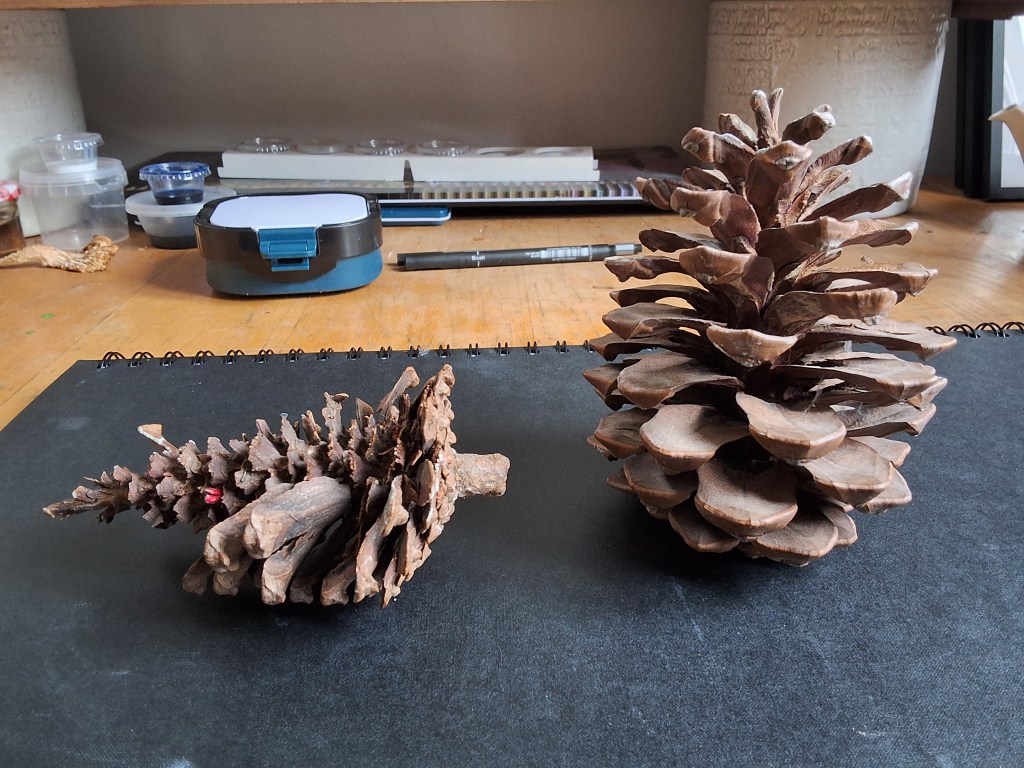
Male (left) and female (right) Pinus Pinaster cones
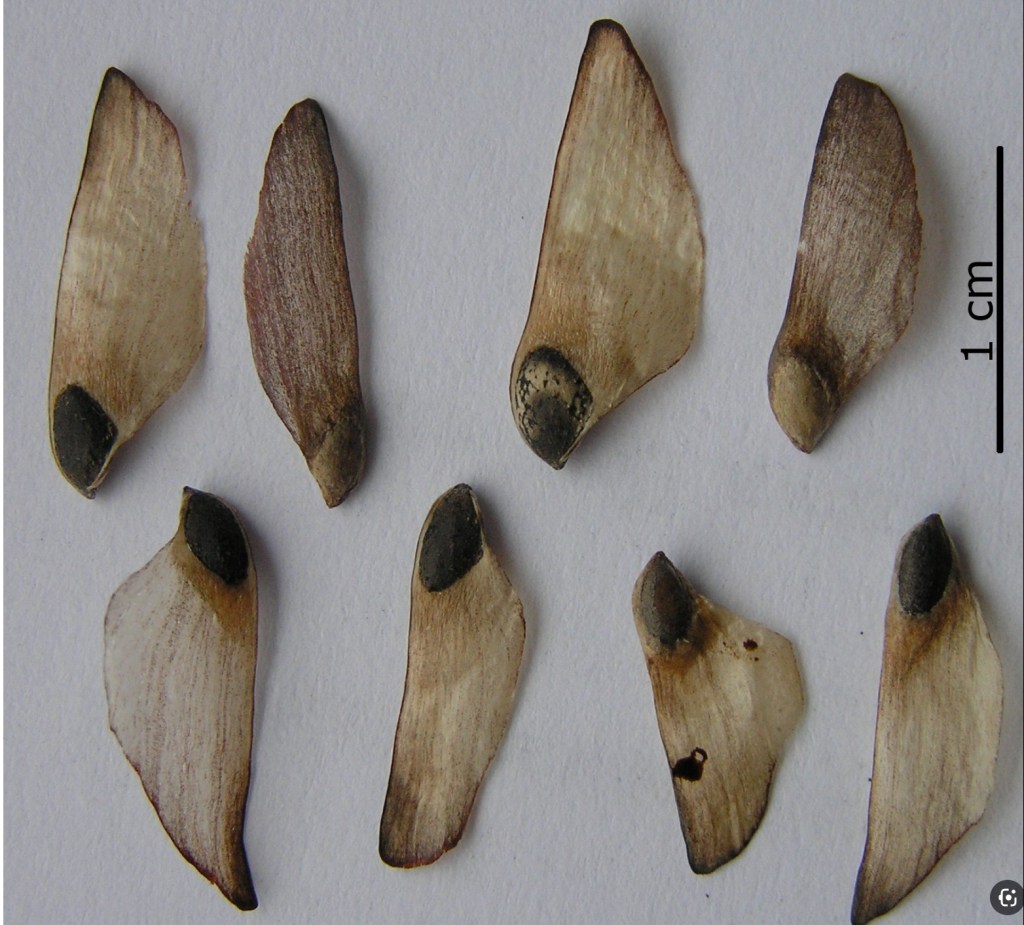
Pine cones evolutionary precursor to flowers.
Religous/mythology
Celtic – pine cones represent regeneration.
Resemblance to pineal gland – shaped like a pine cone, modulating responses to light, sleep patterns, circadian rhythms just as pine cones close in the dark and open in the light. Often called ‘third eye’, linked to spiritual enlightenment.
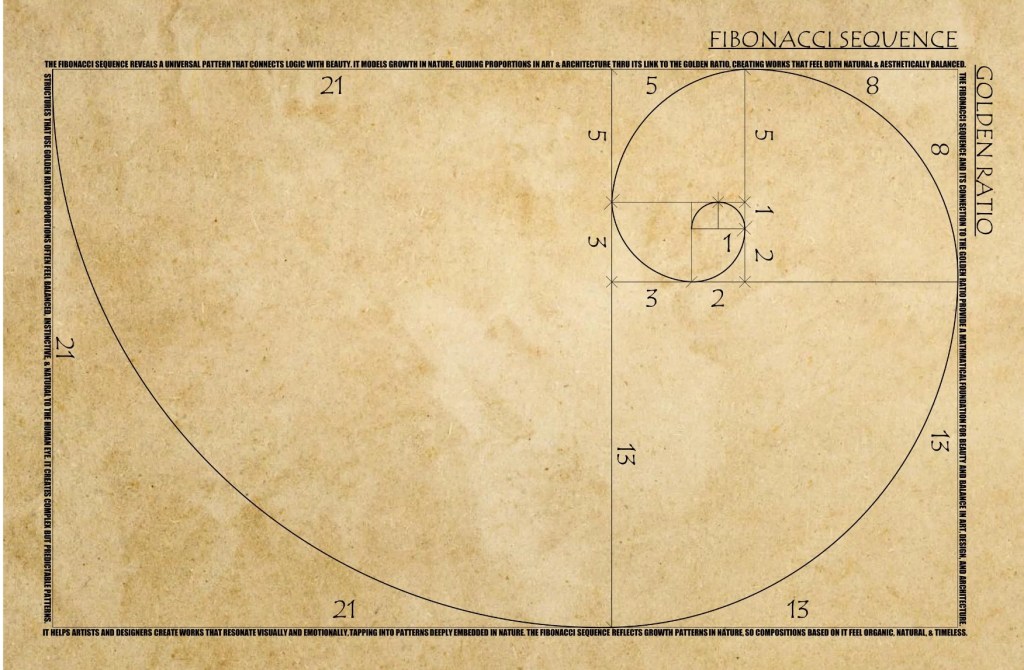
Cones fan out in a Fibonacci spiral sequence in both directions, its growth factor being Phi (the Golden Ratio) and thus grows in the form of the Golden Spiral Ratio. For each quarter turn the spiral makes, it gets further from the origin by a factor of Phi (1.68). Two quantities are in golden ratio when their ratio is equal to the ratio of their sum to the bigger quantity.
Greek/Roman beliefs carried over into Roman church.
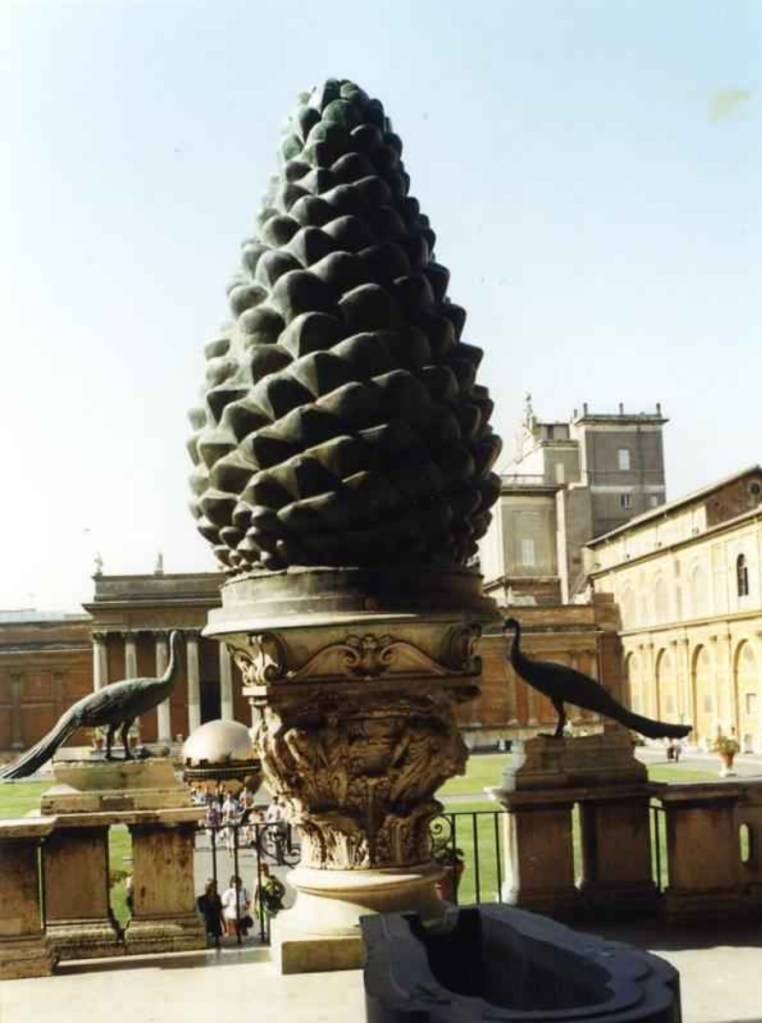
La Pignone, Vatican, 1st C
Originally stood near the Pantheon next to Temple of Isis, moved to Old St Peter’s Basilic in the middle ages and moved to current site in the Vatican in 1608.
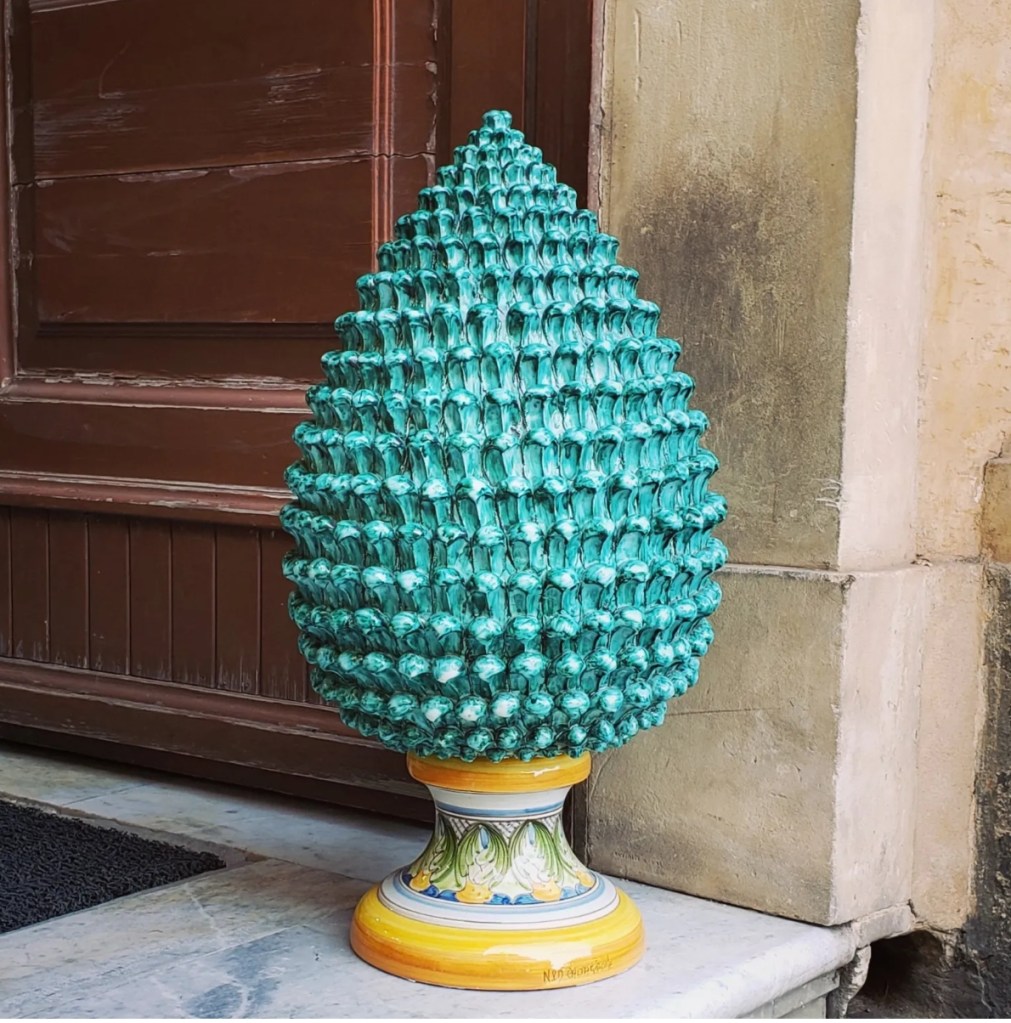
Majolica pine cone, Sicily
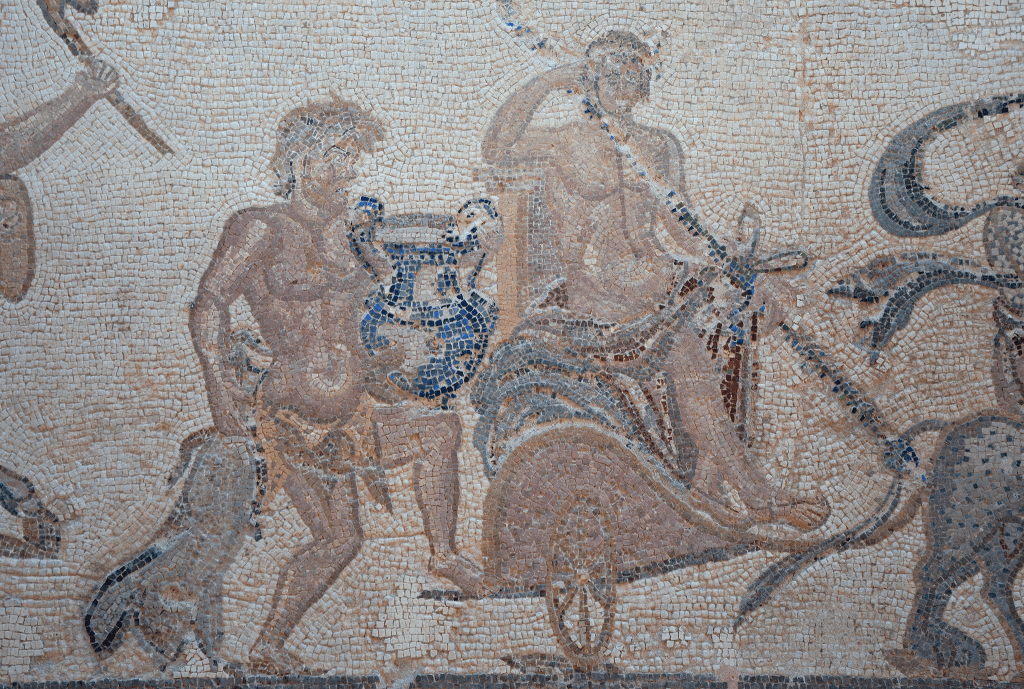
The Triumph of Dionysus, mosaic, Paphos, late 2nd/early 3rd century.
Dionysus typically depicted carrying a thyrsis, a staff made of giant fennel covered in vine leaves of tainia (a kind of ribbon worn at festivals or wound round cult objects) and topped with a pine cone. Carried by devotees of his cult and symbolising prosperity, fertility and hedonism.
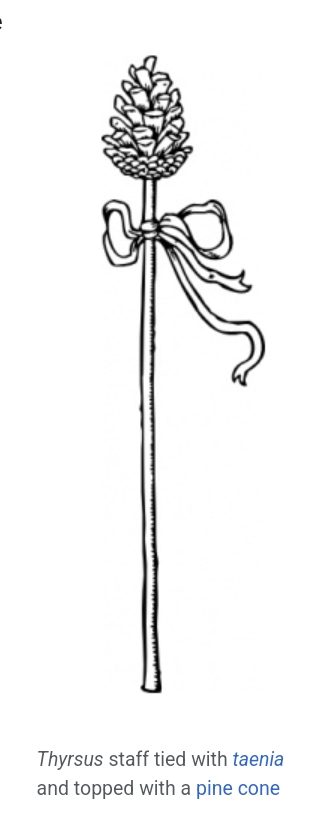
The Pope’s ferula (staff) can also feature a pine cone at the top (though sometimes a globe).

Domenico di Michelino, Dante and the Three Kingdoms, 1465
Ornamentation/decoration
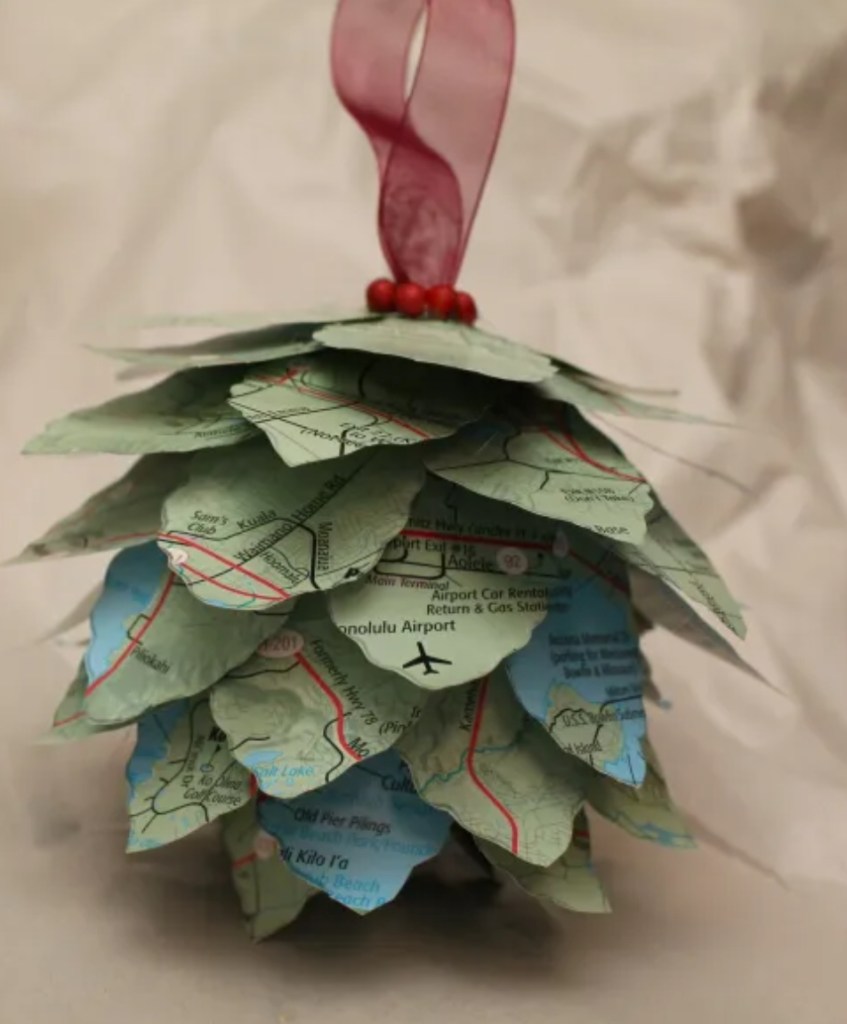
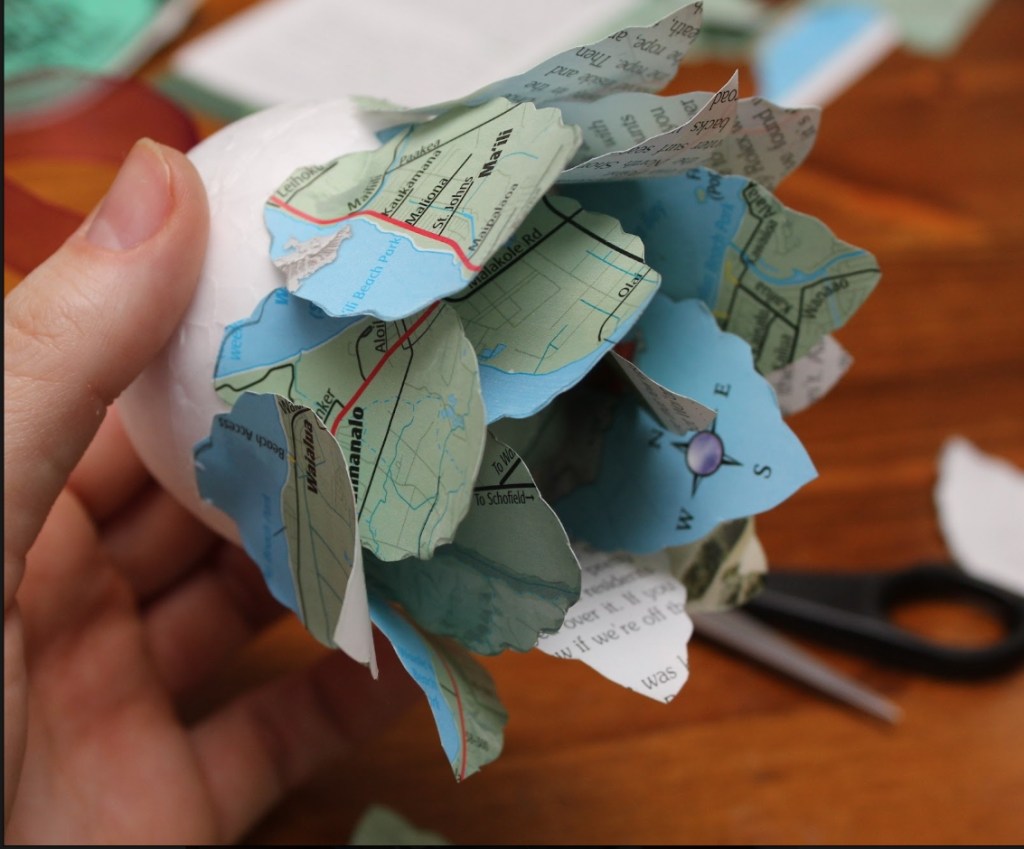
How to make on https://turtlesandtails.blogspot.com/2011/11/pinecone-map-ornament.html
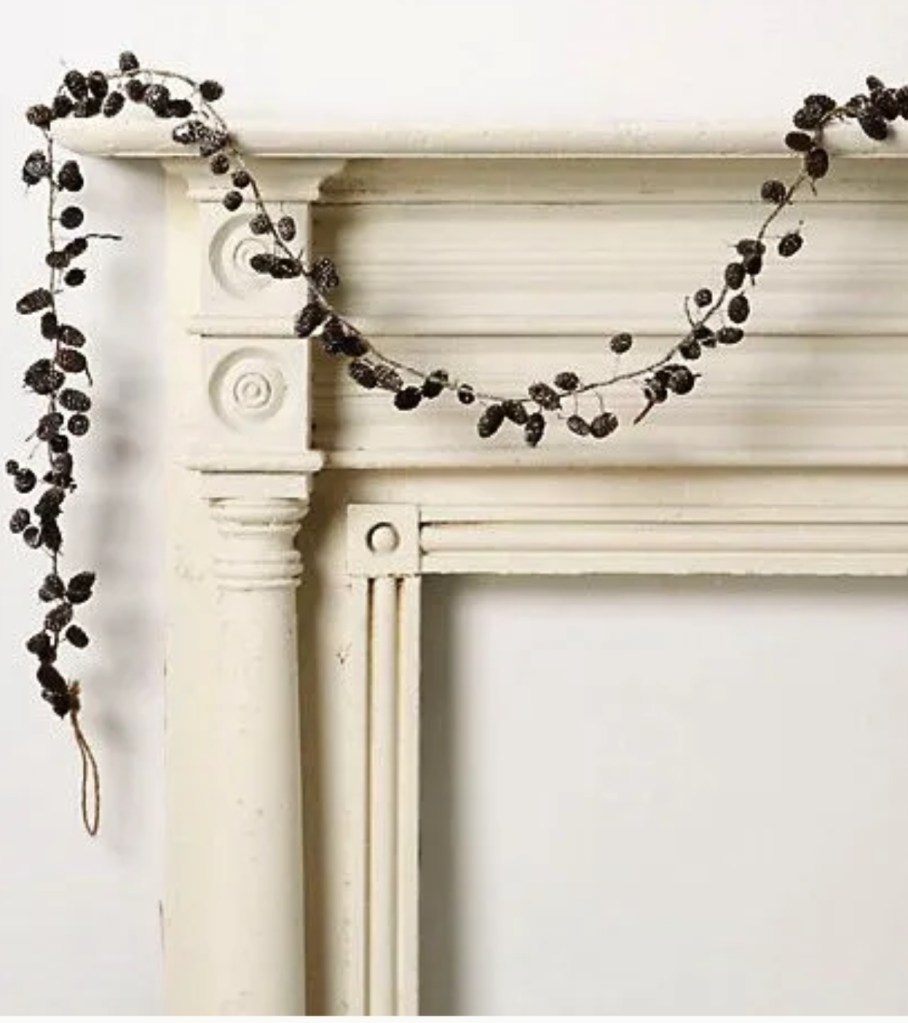
Pine cone garland, Anthropologie
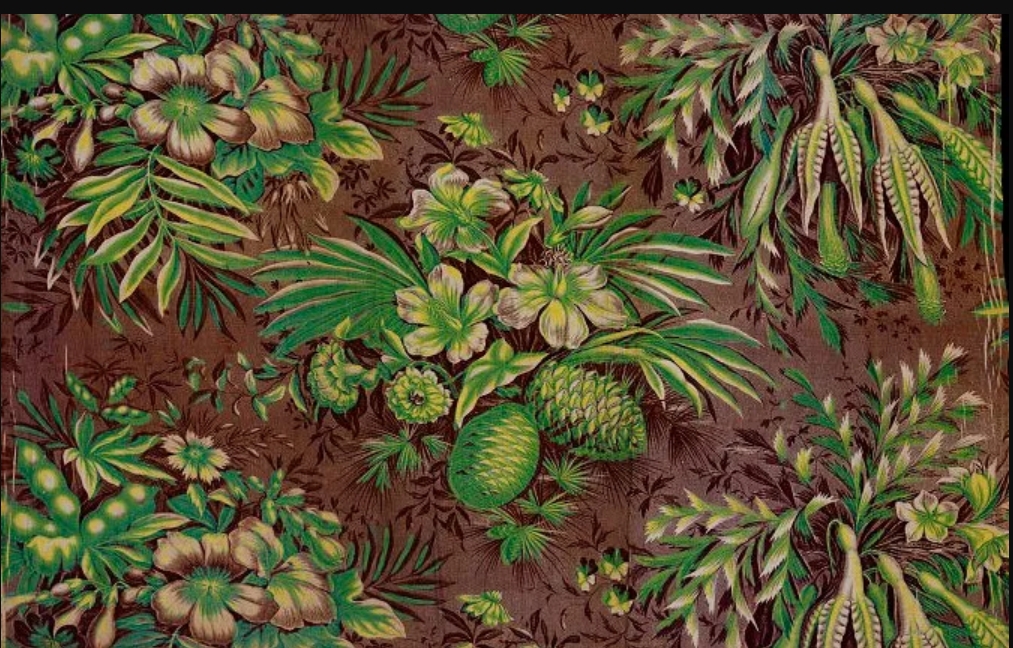
Mulhouse, V & A, 1830s
‘Snowy Brook’, Robert Kaufman

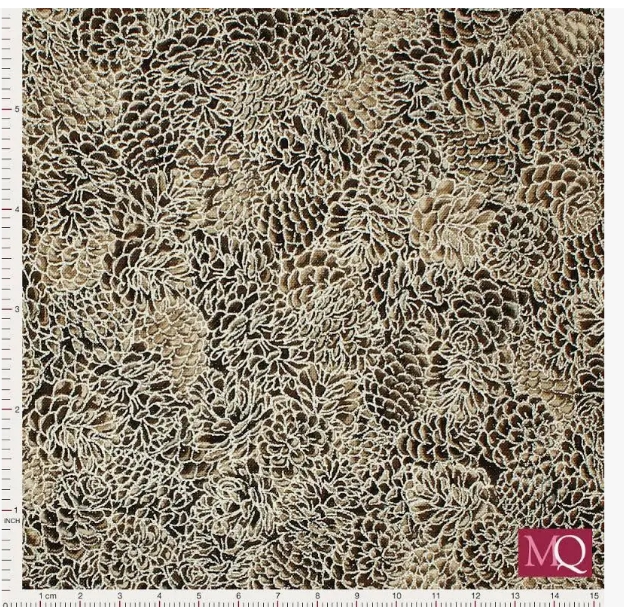
‘Packed Pinecones’, Robert Kaufman
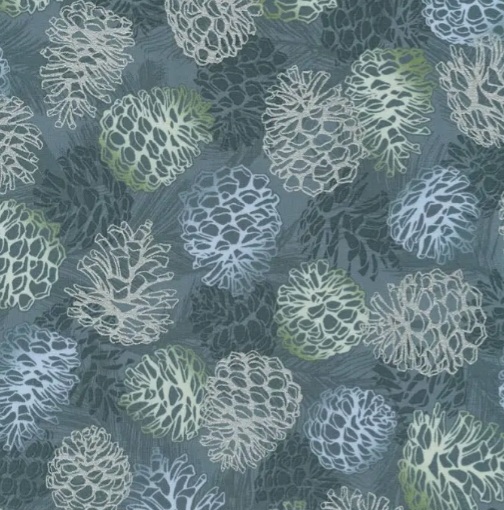
‘Winterstone’, Robert Kaufman
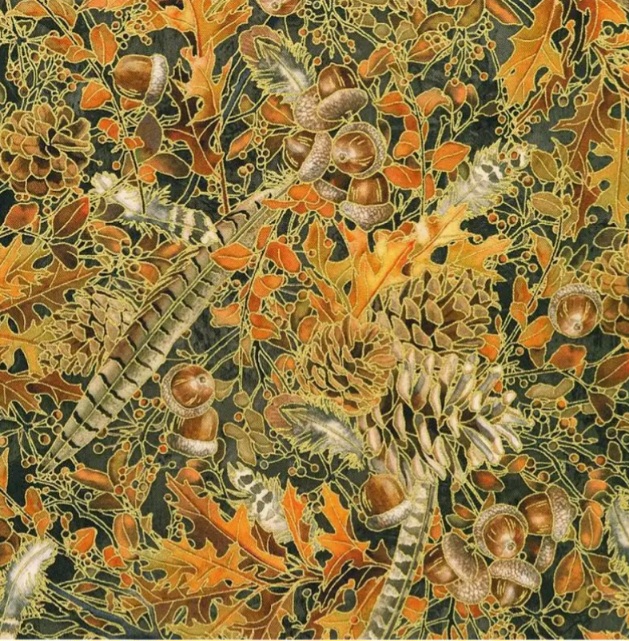
‘Warm Welcome’, Robert Kaufman
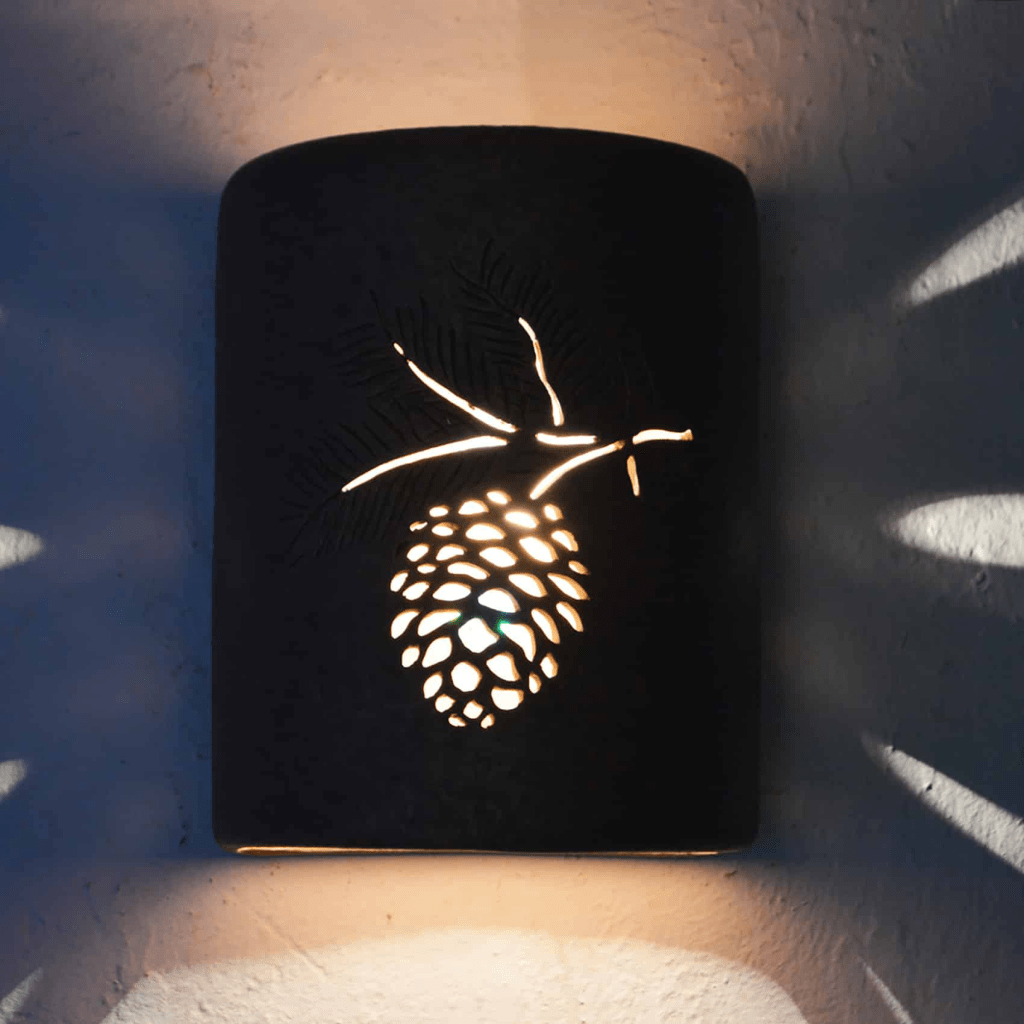
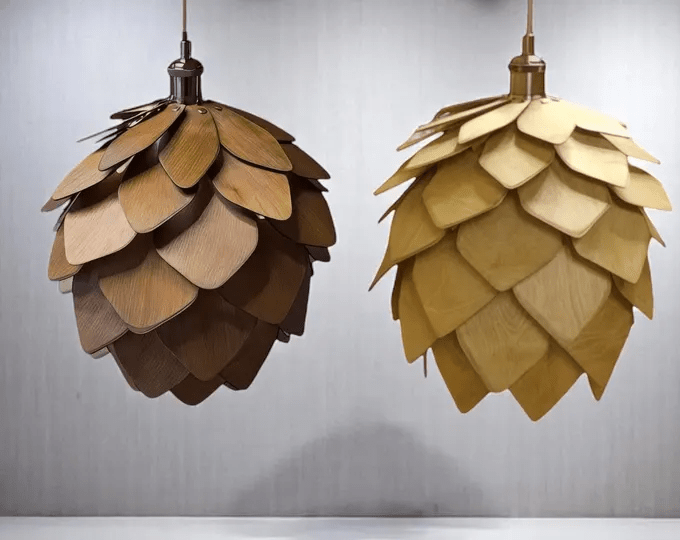
 Creative Practice