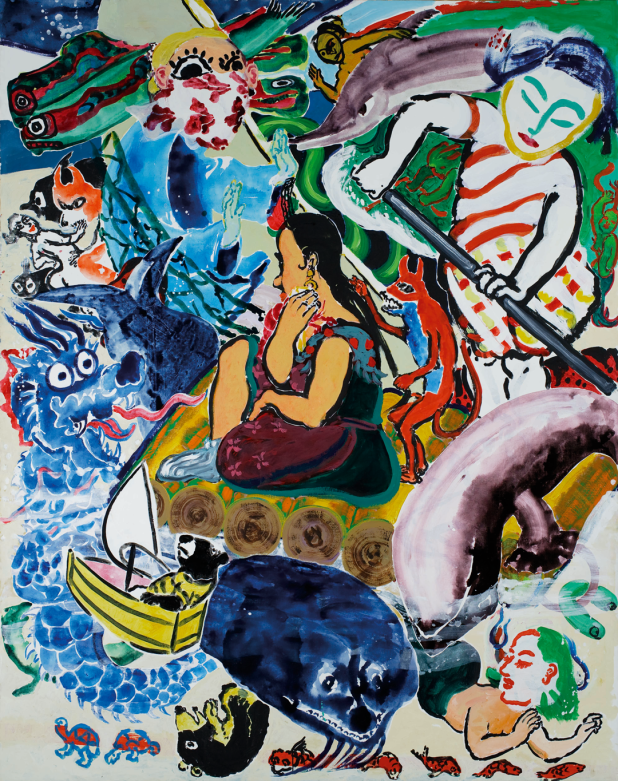

Paula Rego, The Raft, 1985
Rose Wylie, Cuban Scene, 2016
Rose Wylie (1934 – ), Paula Rego (1935 – 2022
Both mainly figurative, graphic styles, trained at London art schools, cite many influences in common (eg neo-expressionists especially Philip Guston), Walt Disney, Dubuffet). My interest here is in comparing the two – raises important questions.
Paula Rego is very much in the narrative tradition, telling and re-telling stories and is to a large extent autobiographical – the personal is political. Not sure if she identified herself with it but she is often classed as a neo-Expressionist along with eg Philip Guston, Julian Shnabel, Sigmar Polke, Gerhard Richter, George Baselitz, Anself Kiefer. Their work is characterised as a reaction against minimalism and conceptual art and focussed on re-shaping figurative drawing and more formal aesthetics.
Rose Wylie is also a narrative painter and could also be said to be working in the neo-expressionist mould but, unlike Rego, she draws like a child. Is she the logical endpoint of modernist abstraction/Picasso? But Wylie had nothing to unlearn. She also references cave paintings. But if so, is this to take a teleological approach (cf Benjamin)? Are old women the new darlings of an art world, perhaps searching for a new Basquiat figure?
Both artists cite Philip Guston. Won’t go into him here but he turned away abstract expressionism and began producing works generally thought mad at the time but he also was influenced by Dubuffet.
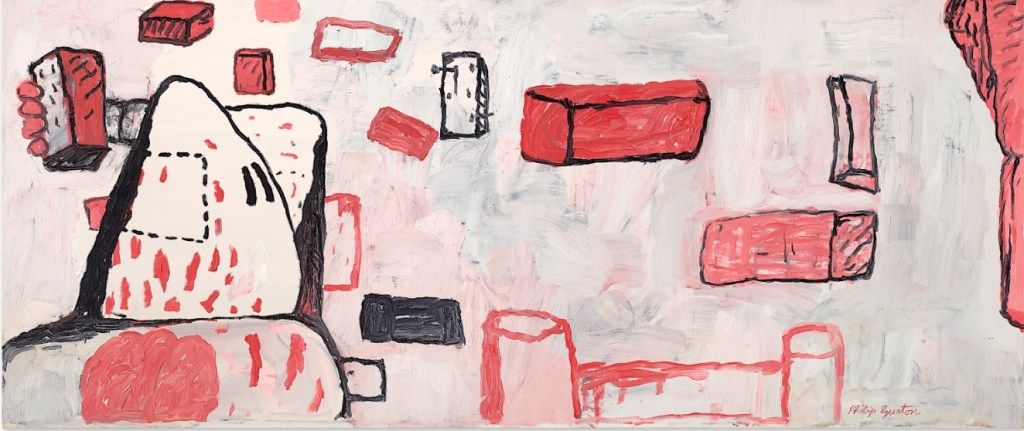
Philip Guston, Bricks, 1970
Why is the influence of Dubuffet interesting? Because he came up with the idea of Art Brut (raw art) and known usually as outsider. Usually understaood as art outside the accepted, mainstream boundaries of the art world. Influenced by Hans Prinzhorn’s Artistry of the Mentally Ill, Dubuffet champtioned the sort of art produced by non-professionals working outside aesthetic norms, such as art by psychiatric patients, prisoners, and children and claimed to find academic art isolating and pretentious.
Jean Dubuffet, Faits Memorables III, 1978
Dubuffet himself was a highly educated, professionally trained intellectualand, the very opposite of naive. The same could be said of both Rego and Wylie though only Wylie is marketed as a naif.
Paula Rego
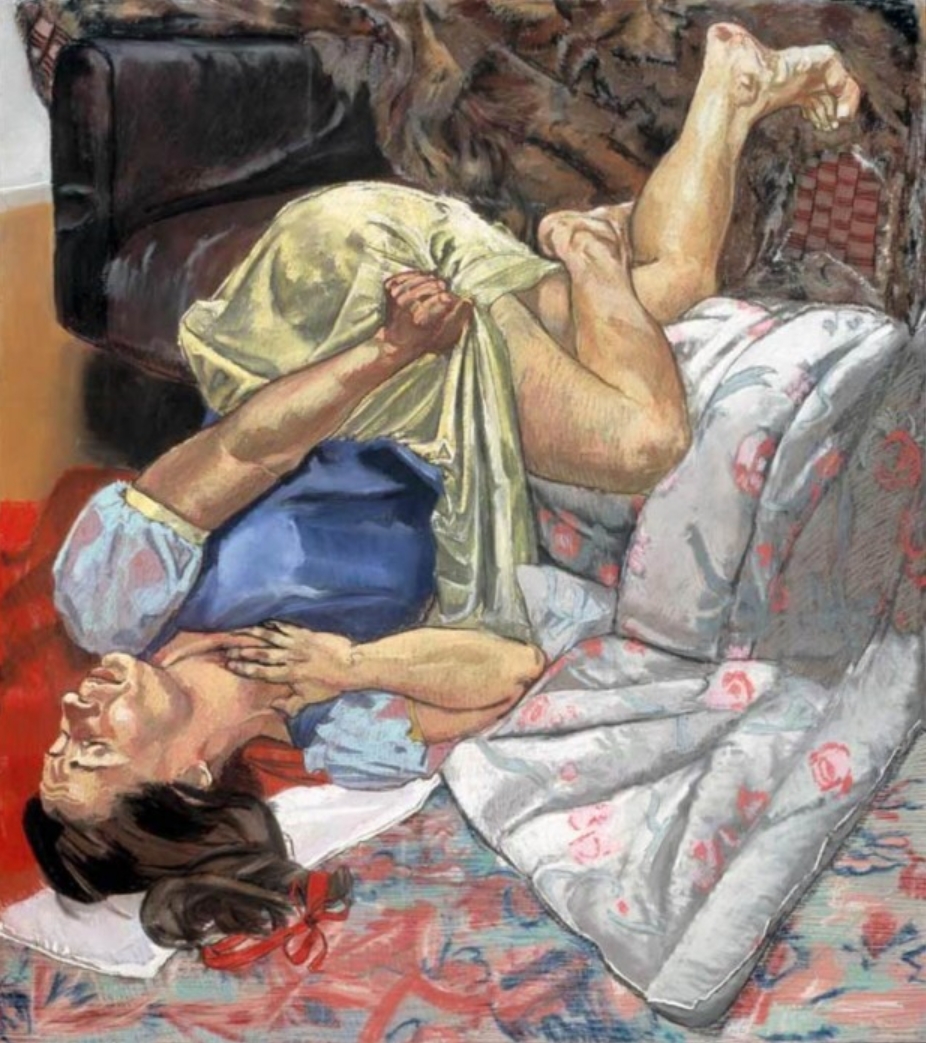
Paula Rego, Snow White Swallows the Poisoned Apple, 1995.
According to the blurb from the Saatchi gallery:
Paula Rego revises the tale of Snow White to expose the fallible value of youth. Dressed in traditional Disney garb, this Snow White isn’t a beautiful princess, but a middle-aged woman. Pictured moments after eating the poison apple, she lays sprawled amidst overturned furniture, suggesting painful and violent demise. Clutching her skirts, she alludes to her sexual nature, as if clinging to something slipping away. Her body lies between a blanket adorned with spring blossoms, and a sinister backdrop of red and black. Rego illustrates the conflict of reality encroaching on the socially imposed myths of female worth, construing aging as both a physical and psychological violation.
Snow White’s iconic attire is portrayed with a sense of realism, yet the distortions and exaggerations inherent to Expressionism are evident in the figure’s form and expression. The chaotic brushstrokes and textures within the background further contribute to the emotional intensity of the scene … Rego challenges traditional representations of this fairytale moment, imbuing the artwork with a raw and poignant power that is typical of her approach to narrative painting within the Expressionist genre’.
https://www.artchive.com/artwork/snow-white-swallows-the-poisoned-apple-paula-rego-1995/
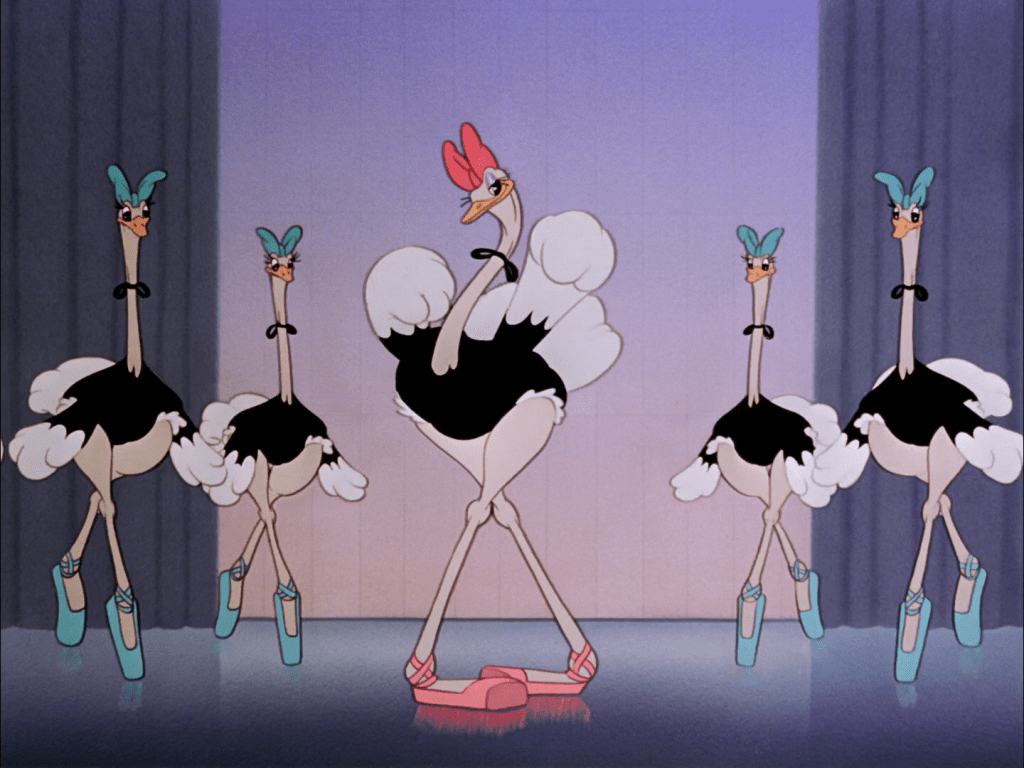
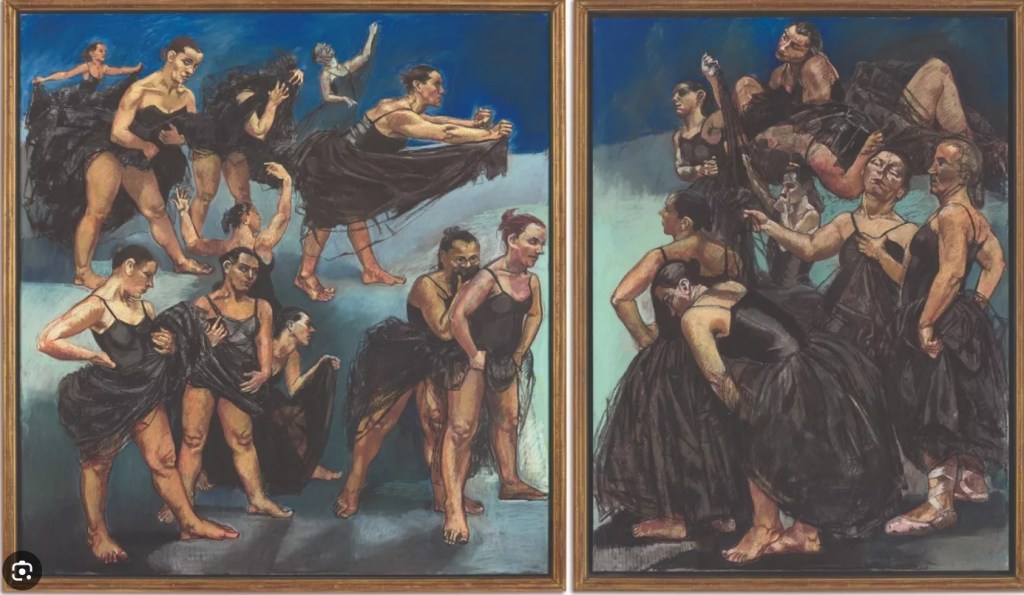
Paula Rego, Dancing Ostriches from Walt Disney’s Fantasia (1995)
Rego was 61 when she painted it and said:
‘the Ostriches couldn’t have been done if I hadn’t been the age I am. A younger woman wouldn’t know what it was like, longing for things that are not gone, because they’re inside one, but are inaccessible.’
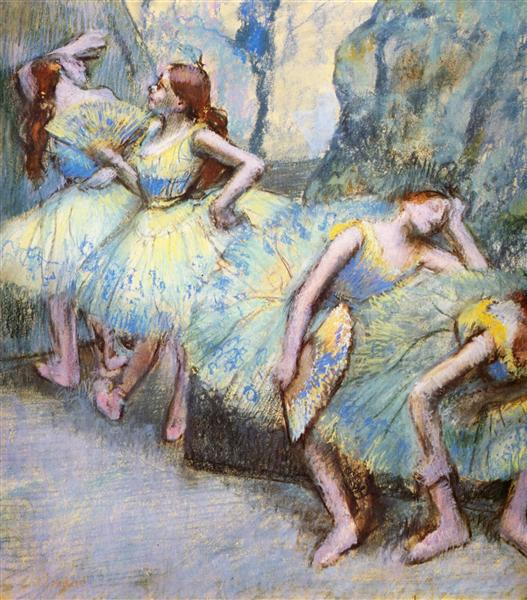
Rego began working almost exclusively in pastel in the 1990s and this works mark a return to the more formal figurative work she had rejected as a student once she became artist in residence at the National Gallery. She said of this time that this was when she realised ‘just how good, how incredibly complex and profound’ Old Master paintings could be’. Are the ostriches a bit like Degas’s pastels of ballerinas?
Strange proportions and sometimes dwarves are the hallmark of her figurative work. Influenced by Velasquez in Las Meninas?

She used the same model – Lila Nunes, who had also been her husband’s carer – for almost all of her figurative works for 30 years. She has been described as Rego’s alter ego, embodying the emotions and scenarios Rego wanted to portray.
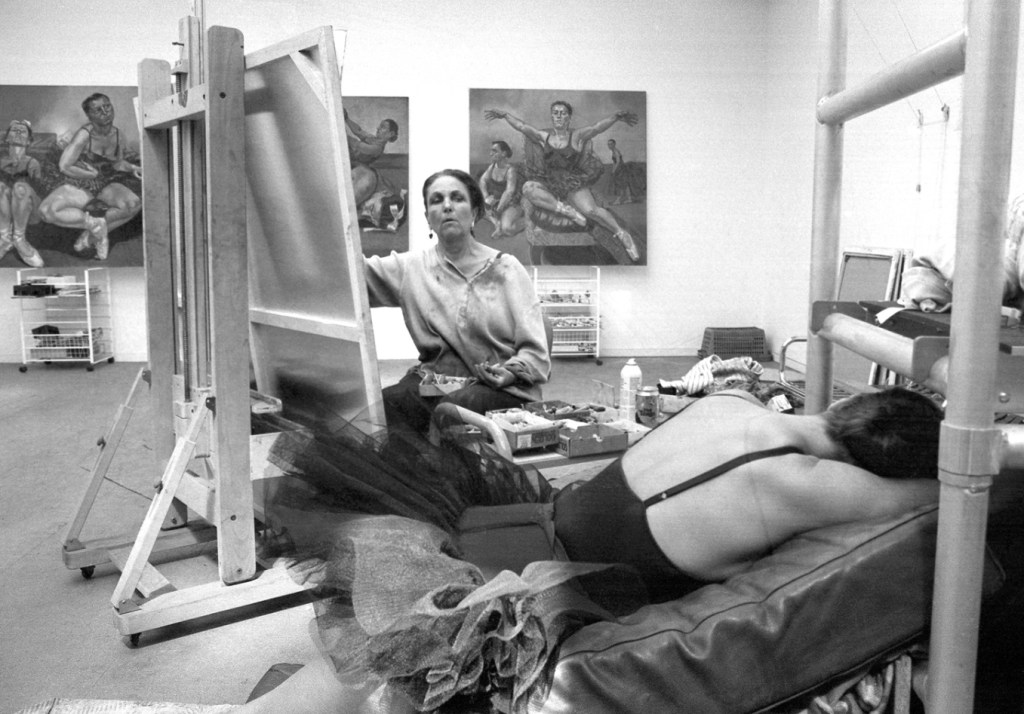
Lila Nunes posing for Dancing Ostriches
Rose Wylie

Rose Wylie, Snowwhite (3) with Duster, 2018
Here, Snow White is both alive, dusting, and dead in her coffin with different hair.

Rose Wylie (1934 – ) Someday her prince will come, 2020
According to Zentrum Paul Klee:
For Wylie, illustrators like Walt Disney are role models because they created autonomous imagery that make no claim to realistic representation. In their cartoon worlds, they were not bound to conventional rules, such as accurate proportions or a convincing sense of distance … Wylie is familiar with simultaneous representation not only from comics but also historical sources, such as cave paintings and early Renaissance frescoes.
As in Rego’s work, it is clear that Wylie’s figures lack accurate proportions but not so clear she is self-consciously referring to either of these genres (though this is often attributed to her).
Sometimes I get accused of being too cartoon-like. And from my point of view, they’re not cartoon-like at all. I’m simply using everything at my disposal. For instance, if you paint a hot dog, you paint the lines of heat. I use cartoon language, but I also use Renaissance devices of foreshortening and cross-hatching. I put it all in, mix it up … Exaggeration, I don’t actually go for that either. I go for poetic transformation.
https://autre.love/the-levity-issue/rose-wylie-by-juergen-teller
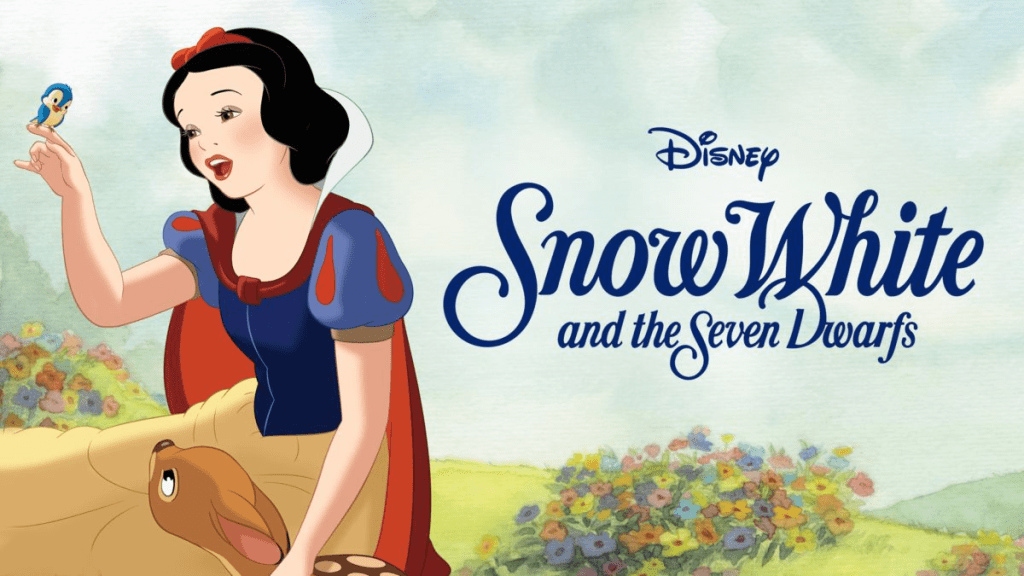
Rego v Wylie – the Walt Disney connection. Rego’s father owned a cinema in Portugal where she watched early Disney cartoons. She became intrigued by fairy stories and folk tales for the rest of her life. Wylie portrays cartoon-like characters without any apparent theme behind them.
Nicholas Serota, former director of the Tate, redefines ‘outsider’ art in his speech opening Wylie’s exhibition at the Jerwood Gallery, Hastings in 2012 shown in the film ‘Rose and Roy’
outsider – outside their experience. Experience completely authrentic hightly sophisticated and very sensitive
other outsiders – philip guston colin mckay (NZ) ‘authentic and original’. RW just not yet collected by the Tate or not yet a household name
Elitist ie have to understand art history to appreciate it. A 5 year old really could do this but not acessible, just insulting
A typical assessment of her work reads something like this one:
at first glance [her work] appears aesthetically simpler but … on closer inspection are revealed to be wittily observed and subtly sophisticated meditations on the nature of visual representation itself. The artist has long been interested in exploring perspectival and compositional strategies other than, and as well as, traditional Renaissance perspective, frequently making numerous iterations of a given theme or motif as a means of advancing her formal investigation.
https://www.goodwoodartfoundation.org/art/artists/rose-wylie/
Is this not just nonsense? Is ‘subversion’ really still cutting edge?
overcoding? She herself doesn’t really make the connections to other artists- probably wisely or shelly leaves that to the curators and critics. See eg https://autre.love/the-levity-issue/rose-wylie-by-juergen-teller
Bring back to own practice. I couldn’t work like Wylie, aesthetics matter. Love Rego’s pastels – very physical work, close connection to the work physically
In interviews, she agrees with everything an interview says or claims the question isn’t relevant to her eg if asked if she has a favourite colour she sayd yes, yellow and green. Also black, brown, pink.
Asked the question How important, or not, is it for you that people looking at your paintings understand the references? Or can they take away their own new meanings from them?
It doesn’t matter at all. I think it can be enriching for the audience if they do see, or interpret it in some sort of way, but it need not necessarily be what I intend. I think it should be open. But it’s quite nice if they’ve seen films, like For A Few Dollars More (1965) or Blazing Saddles (1974).
https://autre.love/the-levity-issue/rose-wylie-by-juergen-teller
Or is she just crazy? Or accused of it, like Guston? Dubuffet and Art Brut. But she’s not an outsider.
The Tate is holding a show of her work in 2026 and is advertising her as a ‘rebel’ artist but without stating what it is she is rebelling against and she is massively successful, recently having had sole exhibitions at highly prestigous galleries including the Royal Academy and the Gallery at Windsor (as showcased in Forbes magazine).
Art market and ‘diversity’. Picked up by Miller sisters – looking for next big thing? Is the joke on the public, the market or Wylie herself? T shirts and general merch at Jerwood.
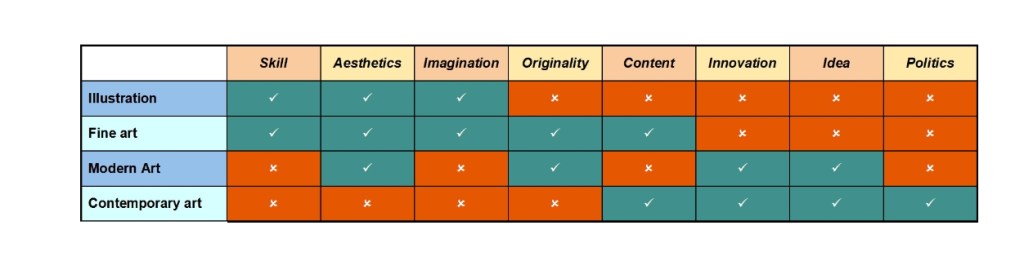
Can the differences between the two artists be as simple as one has enormous skill and the other does not? A simplistic table of the characteristics of different schools/movements would suggest they are.
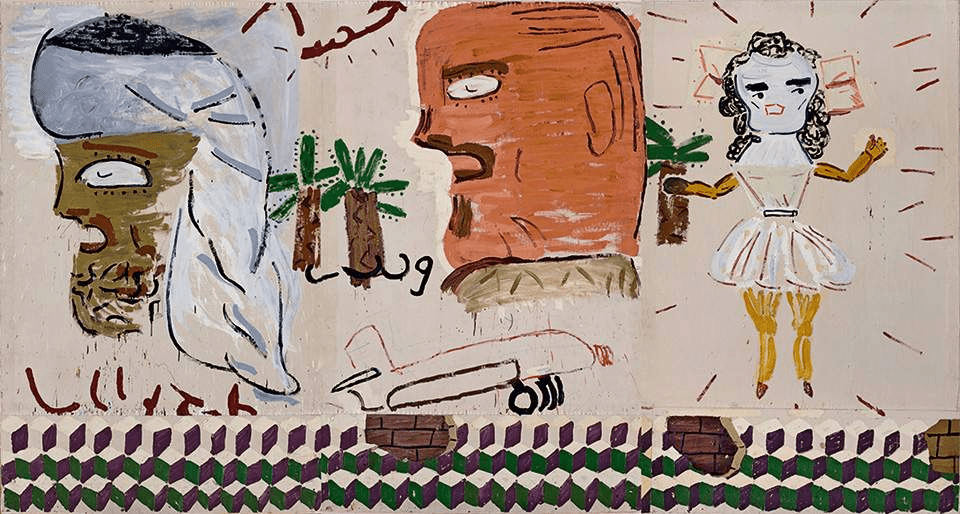
Arab and Dancing Girl 2006
https://www.tate.org.uk/tate-etc/issue-29-autumn-2013/rose-wylies-arab-and-dancing-girl-2006
Fine art
- Skill and aesthetics are both strong.
- Equivalent to a high-end illustrator specializing in painting, and working for oneself.
- Stylistic innovation, but usually figurative.
- It aspires to have significant content and convey it through an equally captivating means.
- Strong tendency to reject digital art entirely in favor of traditional means (though this is neither necessary nor remotely appropriate).
- This style is not taken as seriously in the art world anymore, is considered backwards or craft, and it’s difficult to make money at it.
Modern art
- Art for art sake.
- Aesthetics are paramount.
- Innovation is a must.
- High or narrow focus on elements: color, texture, gesture, scale
- Content may only be in the paint or physical medium itself.
- There may be a market for it if the artist is on the more aesthetic end of the spectrum and produces a polished product.
1Contemporary Art
- Skill, aesthetics, and originality are secondary, irrelevant, or repugnant.
- Art is a prop in the service of conveying an idea, creating a reaction, starting a conversation, or spurring social change.
- Postmodern philosophy and familiarity with linguistics are a must.
- Sociopolitical agenda is inextricable from much of contemporary art
- Race, gender, sexual orientation, etc. are of paramount importance.
- There’s no commercial application for contemporary artists, and slots in the museum and gallery system are extremely limited.
In a nutshell
 Creative Practice